synopsis - La velada -
〰️
synopsis - La velada - 〰️
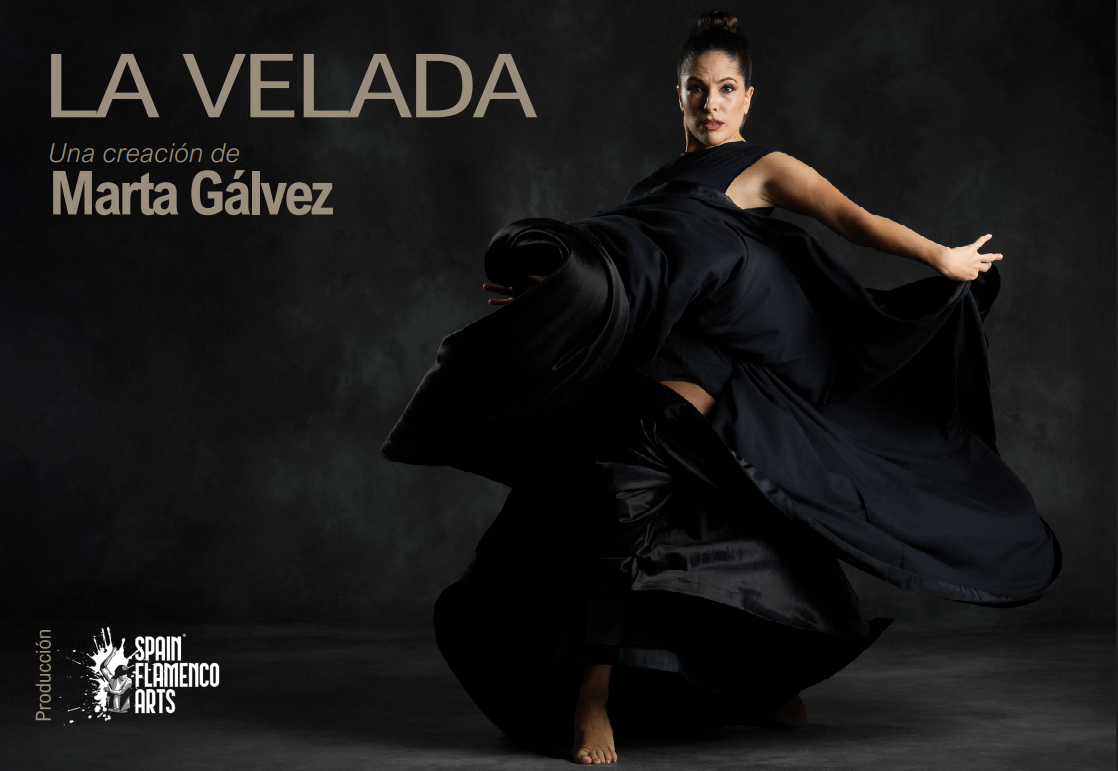
La Velada is an encounter between the traditions of flamenco and Marta's own artistic vision of dance.
The stage becomes an intimate space where she expresses gratitude for all that she has received, honors the women who have inspired her, and draws from these influences to create her own unique dance language.
There is no story to tell, but rather a body that dances, remembers, and transforms everything she has inherited into something entirely her own.
La Velada is a ceremony shared with the audience, where the past breathes through the movements and gestures of the present.
1st part - NIGHT AND NATURE
La Velada begins with music composed to evoke the night, the nature.
This is the start of her journey, Through movement, she brings together poses and elements from traditional Spanish dance while using a more contemporary vocabulary, drawing inspiration from artists she deeply admire, such as Antonia Mercé.
The opening with castanets is also a tribute to this tradition and to the women who have shaped her understanding of dance.
2nd part - Asturias
Many in the audience will recognize this guitar piece while played: Asturias. Marta chose this music because it was the very first piece she ever danced as a young girl, when she began studying Spanish classical dance.
she honors this early memory starting with this song, and then she reimagines the piece by blending it with a flamenco beat: La Seguiriya. Bringing together the elegance and stylized movements of Spanish classical dance, the sound of castanets, and a contemporary movement vocabulary, Marta offers us her own interpretation of tradition—honoring its roots while making it entirely her own, and finisigh with strong and complex footwork.
3rd part - a poem
We have journeyed through Spanish classical dance and flamenco, experiencing their music, movement, emotions, and physical expression.
Now, the performance pauses to change its language. Rosa Linero, takes the stage alone to recite a poem by Rafael de León, about heart beak and vulnerability.
Until this moment, we have experienced emotions through movement and dance. Now, we hear them directly, through the spoken word, without intermediaries.
this interlude Moves from the physical language of dance into a more literary and theatrical dimension.
For a few moments, the performance steps away from movement to give voice to the memories and feelings.
4th part - Bulerias: Playfulness and Complicity
Following the intensity of the previous scene. the flamenco beat: bulería, shifts the energy. It brings Rosa and Marta together in a moment of affection, playfulness, and friendly rivalry.
Their relationship evokes that of a mother and daughter: Rosa wants to teach marta, while marta wants to express her own personality. It is a lighthearted scene that also reveals the support and complicity between two women who care deeply for one another.
The music builds gradually. artist by artist, creating a shared musical and theatrical encounter.
5th part - Alegrias, Back to the roots and tradition
Quoting Marta: -Following the encounter and playful spirit of the bulerías, a guitar solo leads into the alegrías.
Here, I want to present tradition in its purest form: from the guitar and cante to the dance, the movement, and the very structure of the piece. This is a deeply traditional passage, with no need to reinterpret or transform it.
It is a way of returning to my roots, to something that is an essential part of who I am and deeply ingrained in me. Because, in order to create my own artistic language, I must also acknowledge, embrace, and take joy in where I come from.-
6th part - Solea, a simbolic death
In this scene, Rosa takes away Marta’s beautiful traditional dress, the bata de cola, marking a symbolic departure from the formality and weight of tradition. Although her roots remain deeply present, Marta sheds this outer layer as an act of rebellion, embracing a lighter, more contemporary expression of herself.
The flamenco rhythm beat: soleá, represents the end of one chapter and the birth of another. It is an emotional dance, touched by sorrow, as Marta says goodbye to part of who she has been and makes way for a new way of understanding and expressing herself through dance.
stay for a little surprise after the vows
after the vows, we will have on stage a group children, local flamenco students doing -Tangos- with these amaging and generous artists. A cherry on the top!
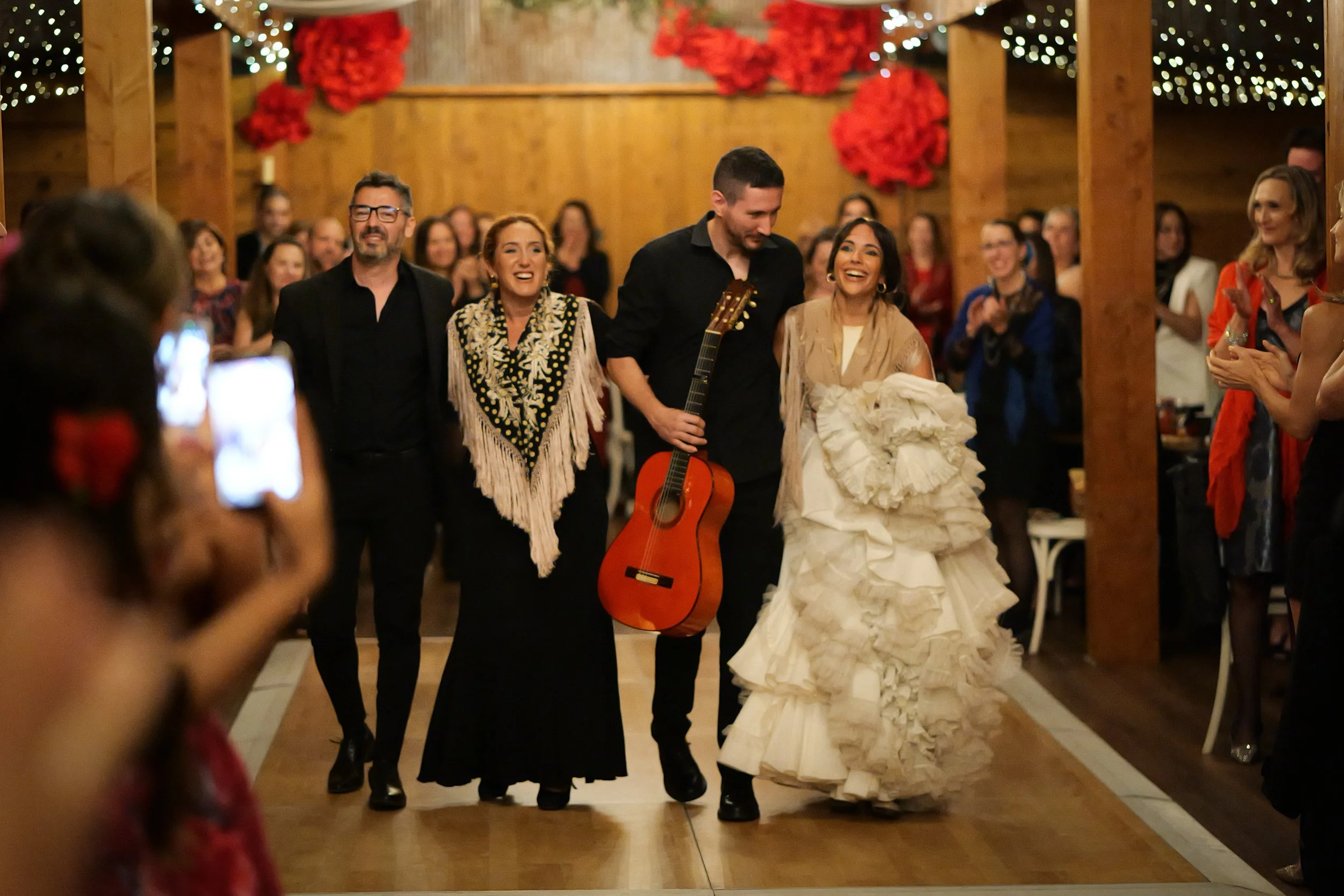
La Velada
Choreographer and dancer: Marta Galvez
Singer: Rosa Linero
Guitar: David Duran
Percussion: Luis Dorado
direction: Begoña Fernandez Pellicer
This show is brought to Washington thanks to the support of Luis Fernando Esteban, former Consul of Spain and Paulina Chalita, founder of Semilla Flamenca
For more flamenco events check @SemillaFlamenca on Instagram
TBD - Placeholder